
Project ORTIZ - Ethical GenAI Art
OVERVIEW
Project ORTIZ is an AI+UX case study created during a design challenge, hosted by Design Buddies & STRATMINDS. Project ORTIZ is an attempt to create the framework for an ethical, generative AI art (GenAI) data set.
PLATFORM
Web Browser + Desktop
TOOLS
User Research, HTML, Chat GPT, Google Slides, Figma
SCOPE
10 Days
ROLE
Product Designer

The Challenge
The technological landscape is changing rapidly with advancements in artificial intelligence (AI). This involves dealing with the ethics of AI, specifically as it pertains to the creation of generative AI art (GenAI).
Data sets created by GenAI art platforms have scraped artists’ work as references without consent.
Artists feel betrayed and left without having a say in the matter.
Artists are also left with how this will affect their royalties and way of making a profitable living.
Users creating GenAI art want legal clarity regarding the usage of their GenAI images.
The Problem
Professional artists are losing digital agency and intellectual property control as GenAI platforms scrape their work without consent. This has led to a breakdown in trust between the creative community and tech developers, leaving artists feeling exploited and undervalued.
How might we design a system that allows artists to manage, opt-out, or be credited for their work within AI training datasets to restore their sense of agency?
The Solution
For the degree of this to work:
Creative Commons (CCL) needs to be recognized by Web Standards (W3C).
Artists who wish artwork to be scraped, deploy an open source method of CCL+W3C protocol.
Museums and depositories of public domain artwork need to be scraped to build new ethical AI data set.
My AI Confession

AI can be overwhelming
I've been dipping my toes into generative AI art lately just to get a feel for it, so this design challenge actually came at the perfect time. Along the way, it's been fascinating to hear so many different perspectives on the ethics surrounding AI art.
While I haven't incorporated AI image generation into my own workflow yet, I do use ChatGPT to help with copywriting and user research.
I felt uncomfortable when I’ve created GenAI art.
“As a fellow artist, I feel uncomfortable knowing that an artist’s work was used without their consent.”
The process of how the inner workings of GenAI is able to create.
“Sometimes I just want to check out, as I don’t fully understand. It’s a lot to take in and get overwhelmed.”
The threat of legal action haunts me.
“It’s happened to me, it can happen to you.”
Research and Process
Meet Karla Ortiz
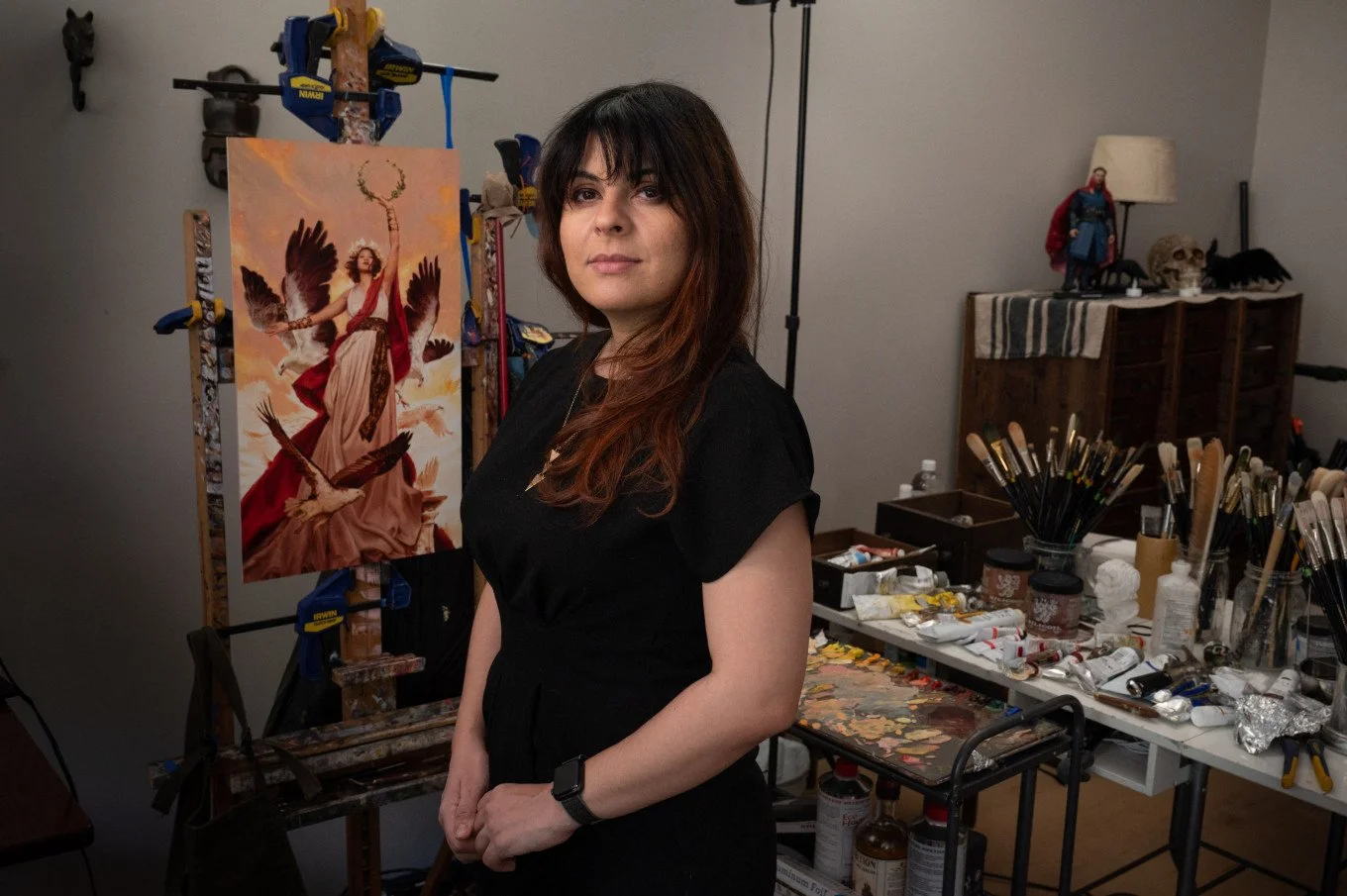
Karla Ortiz
Award winning concept artist
(Avengers: Endgame, Doctor Strange, Black Panther, Star Wars)
“For me, as these models currently are, as exploitative as they are, I cannot use it. But even let's say there comes a future where these tools are ethical - right? - where they were trained on public domain only, and any expansion on that is done so with the explicit consent, knowledge and compensation of artist. I still would hesitate to use it because it's evil to kind of take the creativity away from you. I don't know how else best to say it. It's generating different, you know, possibilities. And for me as an artist, that's, like, my happy place.”
-Karla Ortiz
< One of Grindr's favorite podcasts; plus, art versus AI https://www.npr.org/transcripts/1150245922
Podcasts
AI Ethics, Artists, and What You Can Do About It - Proko
Some Takeaways
-
![]()
“We’re talking about something that could have been done ethically from the beginning and we would have never had this discussion to begin with. Why didn’t these companies just gather public domain data … and any expansion from that done via licensing or something more ethical? That could have been the beginning.”
Karla Ortiz
-
![]()
“If we don’t show some respect and treat [AI engineers] as humans who are trying to do good, then they won’t take us seriously. Then it becomes a war and there’s nothing we can do about it. If we want to have any kind of participation in how they do anything, we need to work with them.”
Stan Prokopenko
-
![]()
“People underestimate how significant a real court injunction would be — saying that companies cannot trawl the internet for data, running roughshod over copyright, privacy, and transmuting that into for-profit products. Companies care about legality, and that could completely change the landscape.”
Steven Zapata


Documentaries
Everything Is A Remix (Updated 2023 Edition) - Kirby Ferguson

Ben McEvoy
Executive Producer
Friends & Enemies
TAAFI Industry 2023
Conferences
"AI isn’t the death of the artist; it’s the death of the 'drudge.' It allows us to move past the labor and get straight to the language of the idea."
John Maeda
Vice President, AI & Design
Microsoft
FITC Spotlight AI 2023
"Designers bear the awkward and important responsibility of raising ethical AI concerns. Blending critical thinking and critical making is the only way to ensure we’re building systems that are more ethical and fairer than the competition."
Insights
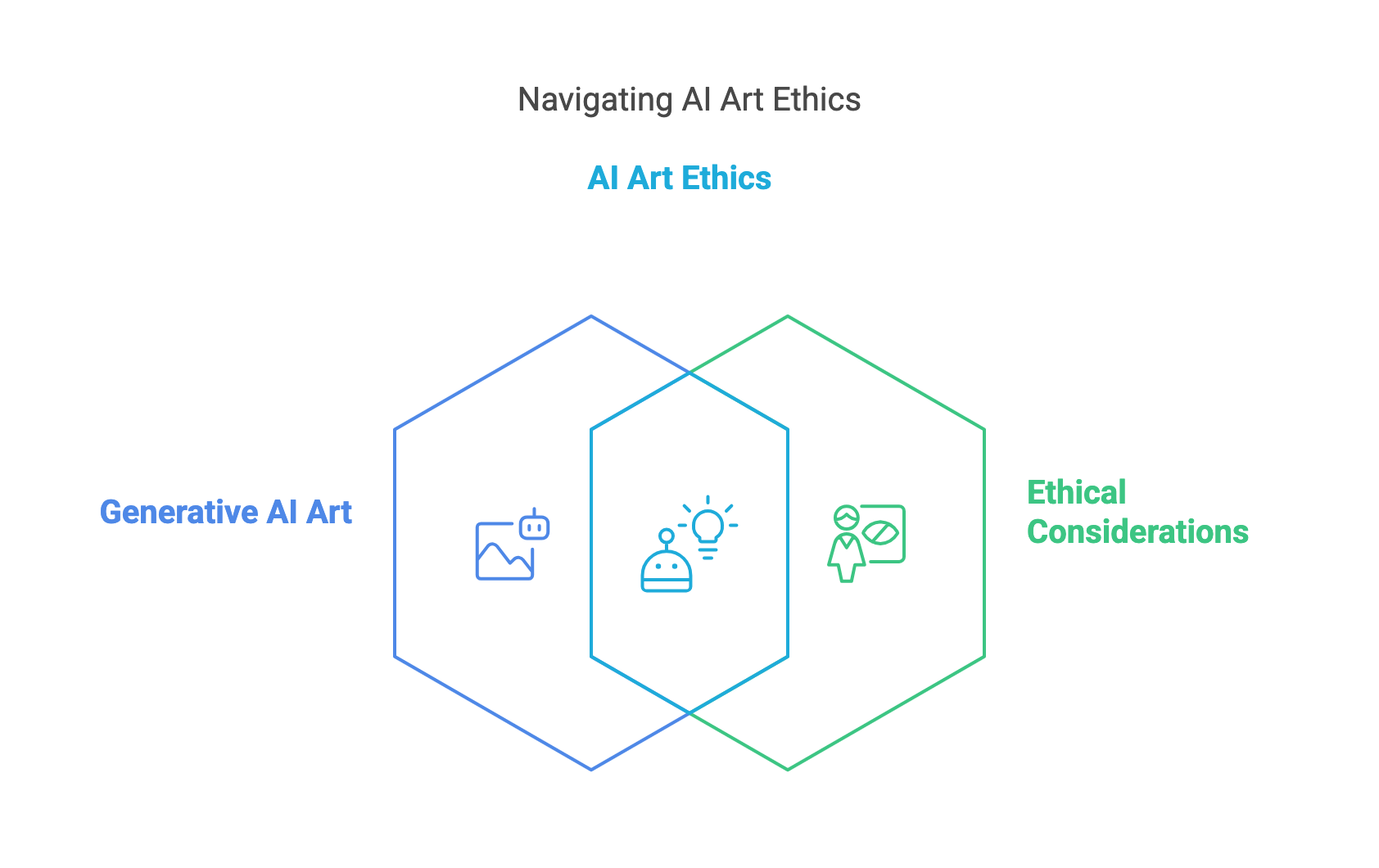
While working on Project Ortiz, I picked up some really great insights on how to make AI art feel more ethical and user-friendly! Here are the main things I focused on:
Creative Commons Markup Language (CCML): It’s all about making sure AI datasets in the process of scraping actually listen to what artists want! By using this tech, we can make sure they follow the specific rules and policies set by the creators.
Giving Credit Where It’s Due: We need simple, built-in ways to cite original work. It’s so important to make sure that everyone's creative contributions are recognized and respected during the AI process!
Starting with the Classics: A great way to get things moving ethically is to use public domain datasets! By starting with museum collections, we can build a solid foundation that’s both legal and fair.
Learn While You Create: Why not teach people about licensing while they’re actually making art? By adding helpful tips right into the app, we can help everyone understand Creative Commons and how to create responsibly!
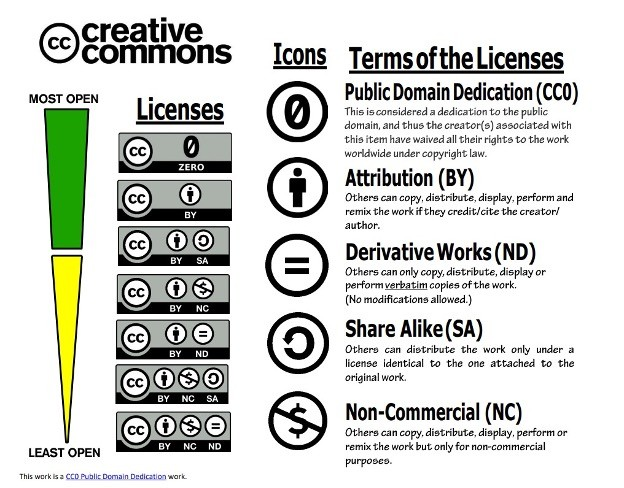
In its current state, the Creative Commons is offered in the following formats: Rich Text, HTML Embed, XMP, and Plain Text. What I propose in to develop the Creative Commons as HTML5 coding called Creative Commons Markup Language. (CCML). CCML would be coded as meta tags recognized by the World Wide Web Consortium (W3C), into any artist’s website, for example:
<head>
<meta charset="UTF-8">
<meta name="CCML" content="Creative Commons License">
<meta name="keywords" content="HTML, CSS, JavaScript">
<meta name="author" content="Jason Das">
<meta name="viewport" content="width=device-width,
</head>
<!—-Future meta content:
CC-BY
CC-BY-SA
CC-BY-NC
CC-BY-NC-SA
CC-BY-ND-NC
CC0
—->
<!—-Future meta name:
Title of Work
Creator of Work
Link to Work
Link to Creator Profile
Year of Creation
—->
Conclusion
Key Takeaways
Phasing It
A controlled tested environment to get a handle how the AI is handling requests. Perhaps rolling out a token system for users.
Beta Test A Sample
Work with 1 large museum to procure and generate AI art. Open it up for more museums and holders of public art.
Slip Through The Cracks
There are possibilities some conflicts may arise with art being used not in the right context. Allow for omission in the test phase for the data set.
Awareness To The Artist Community
Give them a chase to get ready to opt in or integrate CCML into their work. Is there anything we are forgetting to incorporate? Does there need to be more consultation?
Coding Conflicts
Can the coding be feasible with W3C? Are there errors that need to be addressed?
Can the GitHub community help in creating APIs for CCML to work with existing frameworks?
Next Steps
Educate & Create
Terminology
-Process
-How Things Work
-Legalities
Citing Image Results
Afterwards, the creation of an ORTIZ-powered Text to Image GenAI Creation tool toggling the search for Creative Commons endorsed & public domain images.
Breakdown of which images are used, sourcing Top 3 hit results. Compiles the list, displays what CC attribute it contains, Download image and saves all metadata backup.
Framework of the app is based on principles such as
RSS
Blockchain
MLA Citation
Google Image Search